
18th August 2026
Protecting Solar Farms Against Extreme Weather
As renewable energy continues to play an increasingly important role in the UK’s energy mix, protecting solar farms against extreme weather has become a key consideration for developers, owners and operators alike. While solar farms are designed to withstand a wide range of environmental conditions, increasingly unpredictable weather patterns mean that resilience should form part of every site’s long-term risk management strategy.
From storms and flooding to prolonged periods of extreme heat, severe weather has the potential to damage infrastructure, interrupt energy generation and lead to significant financial losses if sites are not adequately prepared.
High Winds and Storm Damage
Solar farms are often located in open, exposed areas where they are more vulnerable to strong winds and severe storms. Although mounting systems are engineered to withstand challenging conditions, exceptionally high winds can damage solar panels, support structures, fencing and associated electrical infrastructure.
Flying debris can also present a significant risk, particularly during storms where surrounding vegetation or unsecured materials become airborne.
Routine inspections and preventative maintenance can help identify any weaknesses before adverse weather occurs.
Flooding Can Affect More Than Just the Ground
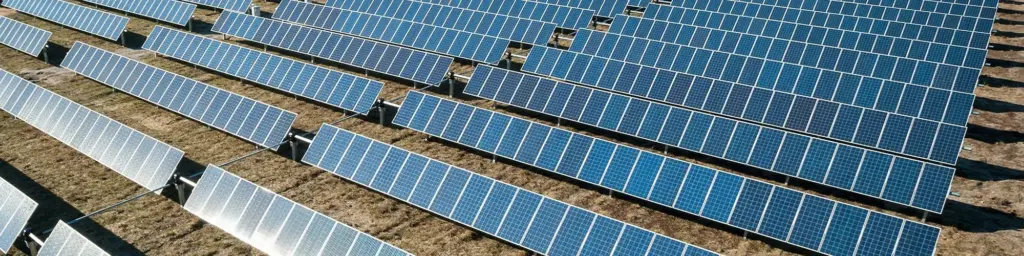
Many solar developments are carefully planned to minimise flood risk, but extreme rainfall events are becoming increasingly common across the UK. Floodwater can damage electrical equipment, substations, inverters and underground cabling while restricting access for maintenance teams.
Standing water may also delay repairs following other weather-related incidents, extending operational downtime and reducing energy generation.
Considering site drainage, access routes and flood resilience measures can help reduce potential disruption.
Hail and Impact Damage
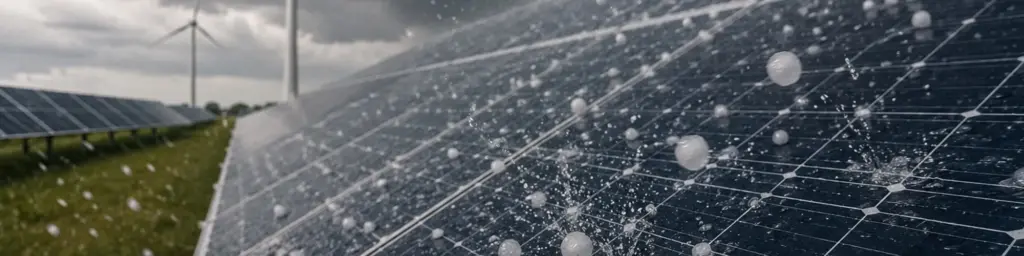
Modern photovoltaic panels are manufactured to withstand normal weather conditions, including moderate hail. However, severe hailstorms can still crack panel surfaces, damage protective glass and reduce overall system performance.
Even relatively minor damage can affect the efficiency of an entire array, making early inspection and replacement of damaged panels essential following significant weather events.
Lightning and Electrical Infrastructure
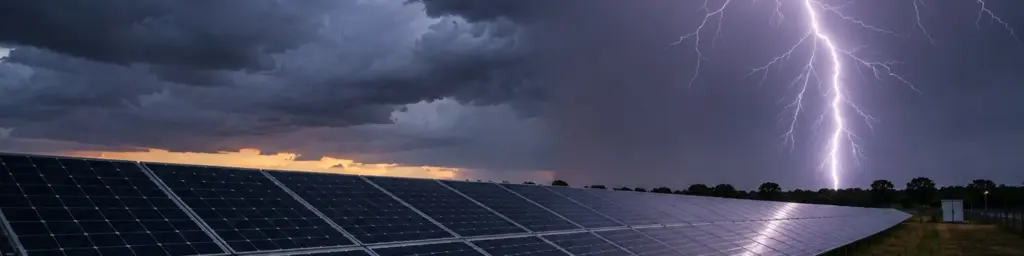
Lightning strikes pose a risk to electrical infrastructure, particularly where solar farms incorporate extensive cabling, transformers, switchgear and monitoring equipment.
While lightning protection systems help reduce the likelihood of serious damage, electrical surges can still affect sensitive components and interrupt power generation.
Regular testing of electrical protection systems should form part of an ongoing maintenance programme.
Extreme Heat and Equipment Performance
Although solar panels require sunlight to generate electricity, excessive temperatures can affect the performance of electrical components such as inverters and transformers. Prolonged heat can place additional strain on equipment and, in some cases, contribute to premature failures if cooling and ventilation are not properly managed.
Monitoring equipment performance throughout periods of high temperatures allows operators to identify potential issues before they develop into costly failures.
Business Continuity Matters
Extreme weather cannot always be prevented, but its impact can often be reduced through careful planning. Having clear emergency procedures, maintaining accurate asset records and carrying out routine inspections can all support a faster recovery following severe weather events.
Business continuity planning also helps ensure that maintenance contractors, replacement equipment and repair procedures are in place should an incident occur.
The Importance of Specialist Insurance
While preventative measures are essential, specialist insurance provides an additional layer of protection when unexpected events occur. Tailored Solar Farm Insurance can help protect renewable energy projects against weather-related damage, business interruption and a range of other operational risks, providing greater confidence throughout the lifetime of a project.
Whether you’re developing a new solar farm or managing an established renewable energy asset, having insurance that reflects the unique challenges of the sector is an important part of protecting your investment.
Click here to find out more about specialist Solar Farm Insurance
If you have a question, please feel free to reach out to the team:
Telephone: 01924 205287
E-mail: info@nabrokers.co.uk